CC BY 3.0
Climate Change & Hurricane Sandy
The science connecting a warming climate to Sandy's destructive power.
You cannot blame any single storm entirely on climate change. But you can ask a sharper question: did climate change make Sandy worse? Across several lines of evidence, the answer is yes. Three mechanisms explain how. Two are well established. The third is still debated.
+1 ft
sea level rise at Battery Park
Sea Level Rise
The Battery sits about a foot higher in the water than in 1900, and roughly four inches of that rise traces to human-caused climate change. Those four inches alone added an estimated $8.1 billion to Sandy's damages, about 13% of the tri-state total, and extended the flood to roughly 71,000 more people (Strauss et al., 2021). A few inches does not sound like much, until it is the few inches that put water inside the subway.
2.3°F
above average SST
Warmer Oceans
Warmer water gives storms more energy and moisture. The physics is fixed: the air holds about 7% more moisture for every 1°C of warming, which is the Clausius-Clapeyron relation. Sandy dropped 10–12 inches of rain on parts of the Mid-Atlantic.
2–4×
faster Arctic warming
A Weakening Jet Stream?
Some researchers think this weakens the jet stream and makes blocking patterns more likely, like the Greenland high that steered Sandy into the coast. The IPCC rates this as low confidence for now. It is still one of the most important open questions in climate science.
Sea Level Rise at Battery Park, NYC
Inches above 1900 baseline, NOAA Tide Gauge Station 8518750
Source: NOAA tide gauge records. Mean sea level trend of 2.87 mm/yr (≈ 0.94 ft/century)
The Trends Are Already Here
We do not have to wait for projections. The data already shows storms changing in ways that fit a warming planet:
Rapid Intensification
More storms are strengthening quickly. Warmer seas are the fuel.
Poleward Drift
The latitude where storms reach peak intensity has drifted poleward about half a degree per decade since the early 1980s (Kossin et al., 2014). That drift points stronger storms toward cities like New York.
Slower Movement
Storms are moving more slowly and staying over each location longer. Sandy's slow approach made its surge worse.
Heavier Rain
Attribution studies estimate that warming raised Sandy's rainfall by 5–10%.
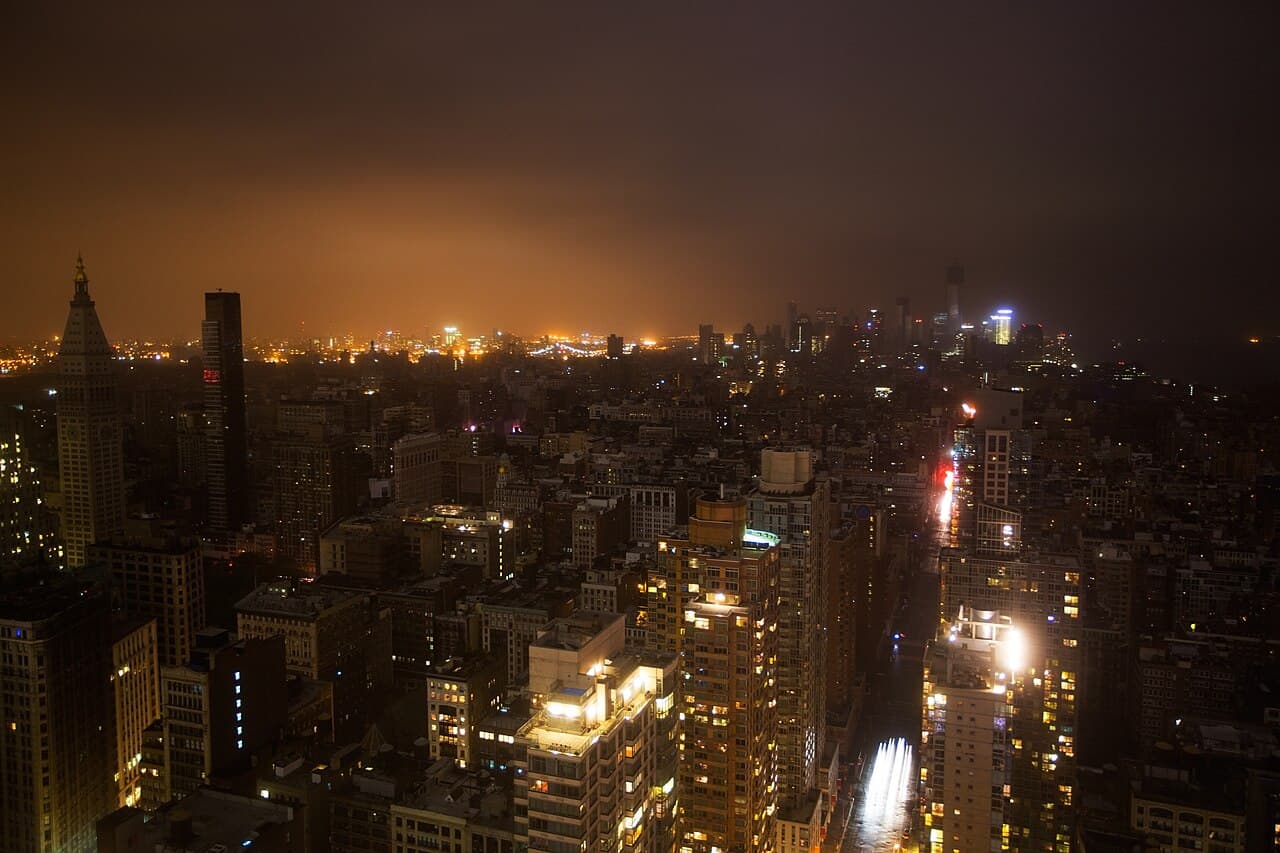
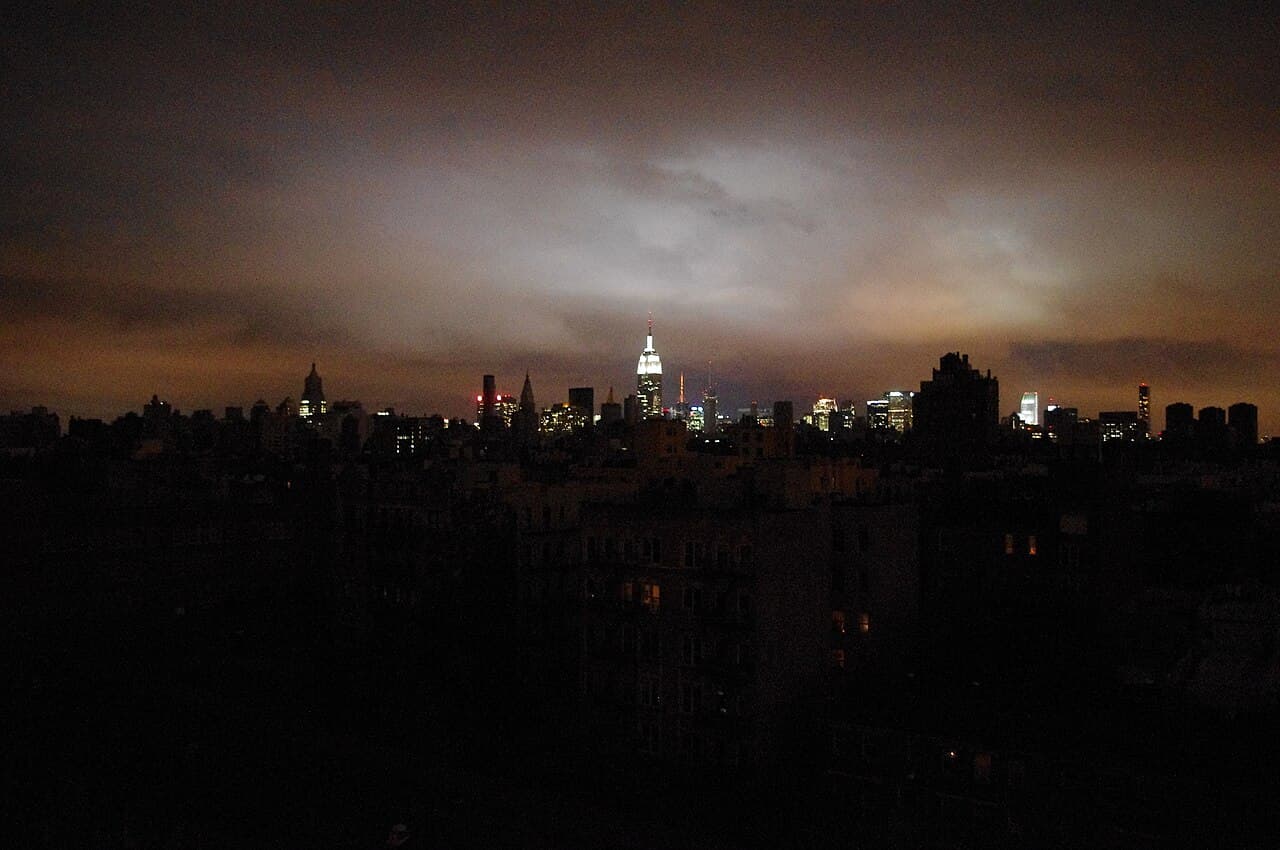
Manhattan without power: a glimpse of what becomes more likely as storms intensify
What the IPCC Projects
| Factor | Projection (AR6) | Confidence |
|---|---|---|
| Sea level rise | 0.44–0.77 m by 2100 (medians, SSP1-2.6 to SSP5-8.5) | High |
| 100-year flood events | At least annual at more than half of tide-gauge sites by 2100 | High |
| Cat 4–5 storms | Increasing proportion | Medium |
| Storm rainfall | +7% per 1°C warming | High |
| Storm surge | Compound increase (sea level + intensity) | High |
| Exposed population | Growing as coasts develop + flood zones expand | High |
Projected Global Sea Level Rise (IPCC AR6)
Median projections in meters relative to 1995–2014 baseline
Source: IPCC Sixth Assessment Report (2021), Working Group I, Chapter 9
Two Strategies: Adaptation and Mitigation
Society has two levers. Adaptation means building defenses for what is coming. Mitigation means cutting emissions to slow the warming. Both are necessary, and neither is simple.
Adaptation
- $1.45B East Side Coastal Resiliency flood barrier
- Staten Island buyout: returning Oakwood Beach to nature
- Elevated building codes (raise costs, may price out low-income residents)
Mitigation
- NYC Climate Mobilization Act: 40% emission cuts by 2030
- RGGI carbon pricing: caps emissions, funds resilience
- Renewable transition (global benefit, long timeline)
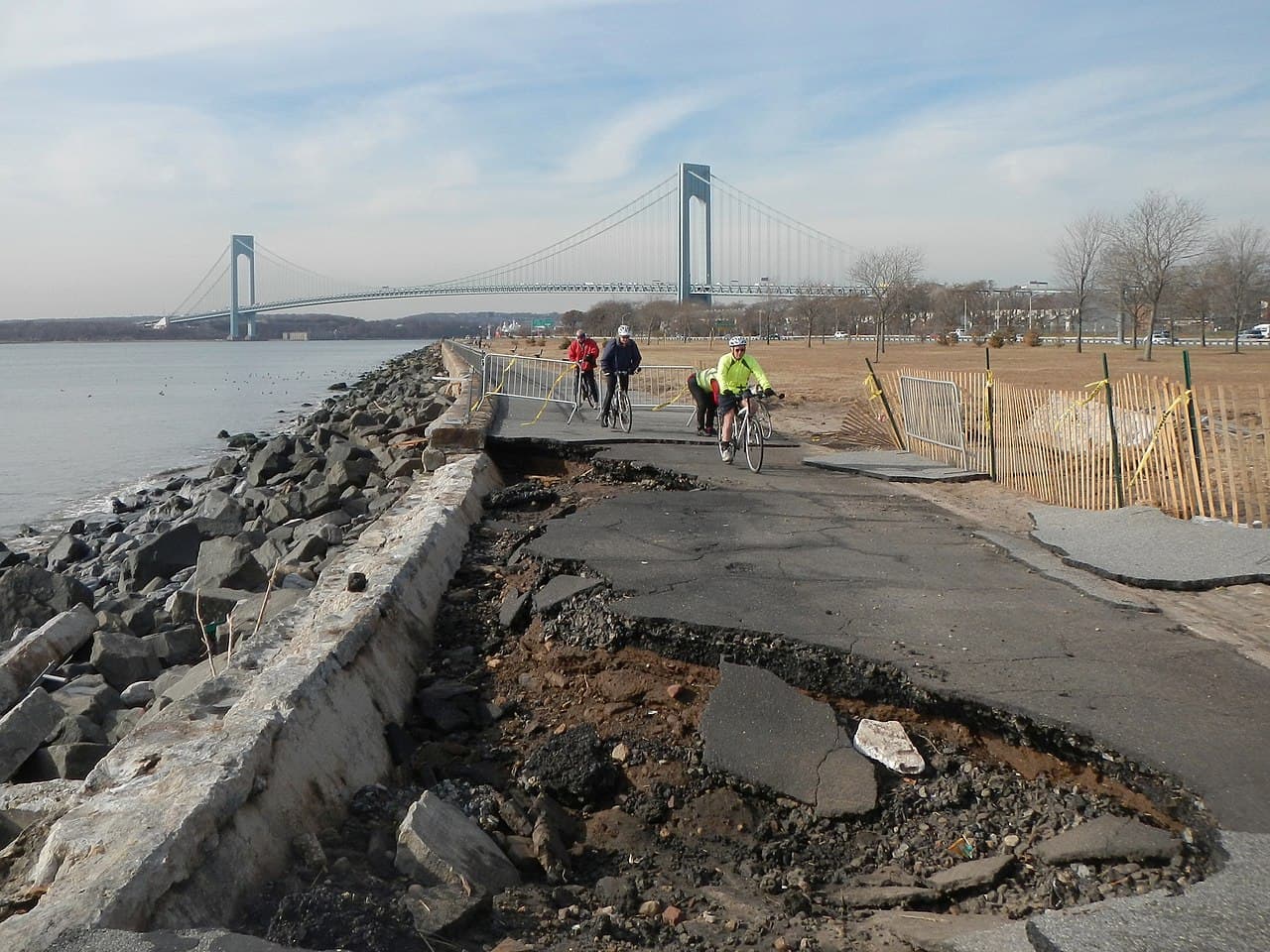
Brooklyn: the damage extended far beyond the waterfront
Who Pays the Price?
The communities most exposed to future storms contributed the least to the emissions driving climate change. That includes low-income neighborhoods, the elderly, and communities of color. The $1.45B flood barrier protects high-value Manhattan real estate first, so the outer boroughs wait. The most affordable coastal neighborhoods are also the most flood-prone, and their population is still growing. The risk lands on the people least able to absorb it.
Sandy was a warning, and the science says the warning is getting louder. The question is no longer whether another storm like Sandy will happen. It is whether we will be ready.
Continue Reading
Bibliography→