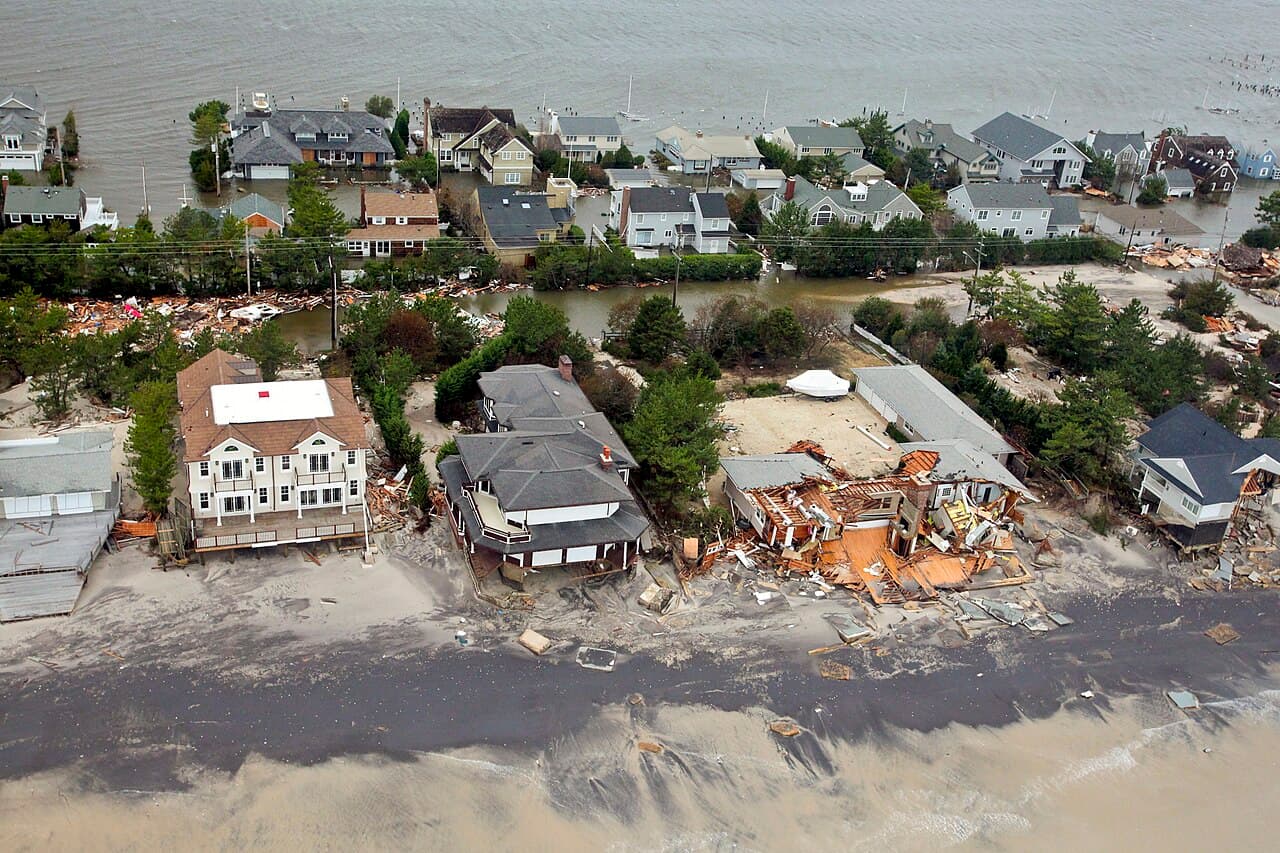
U.S. Air Force / Public Domain
Regional Climate & Relationship to the Hazard
How the Mid-Atlantic's geography created the conditions for a superstorm.
Hurricane Sandy began as a tropical depression in the southwestern Caribbean on October 22, 2012. It became a hurricane within days. Within a week, it forced the country to rethink how it prepares for coastal storms. To understand why Sandy became a disaster, you first have to understand the place it hit.
Climate Classification
The New York and New Jersey metro area sits on a climate boundary. On the Köppen map, the coastal strip reads Cfa, humid subtropical. A short distance inland the colors flip to Dfa, humid continental, the label that covers most of the Northeast. A century of warming has been nudging that line north through the metro area itself.
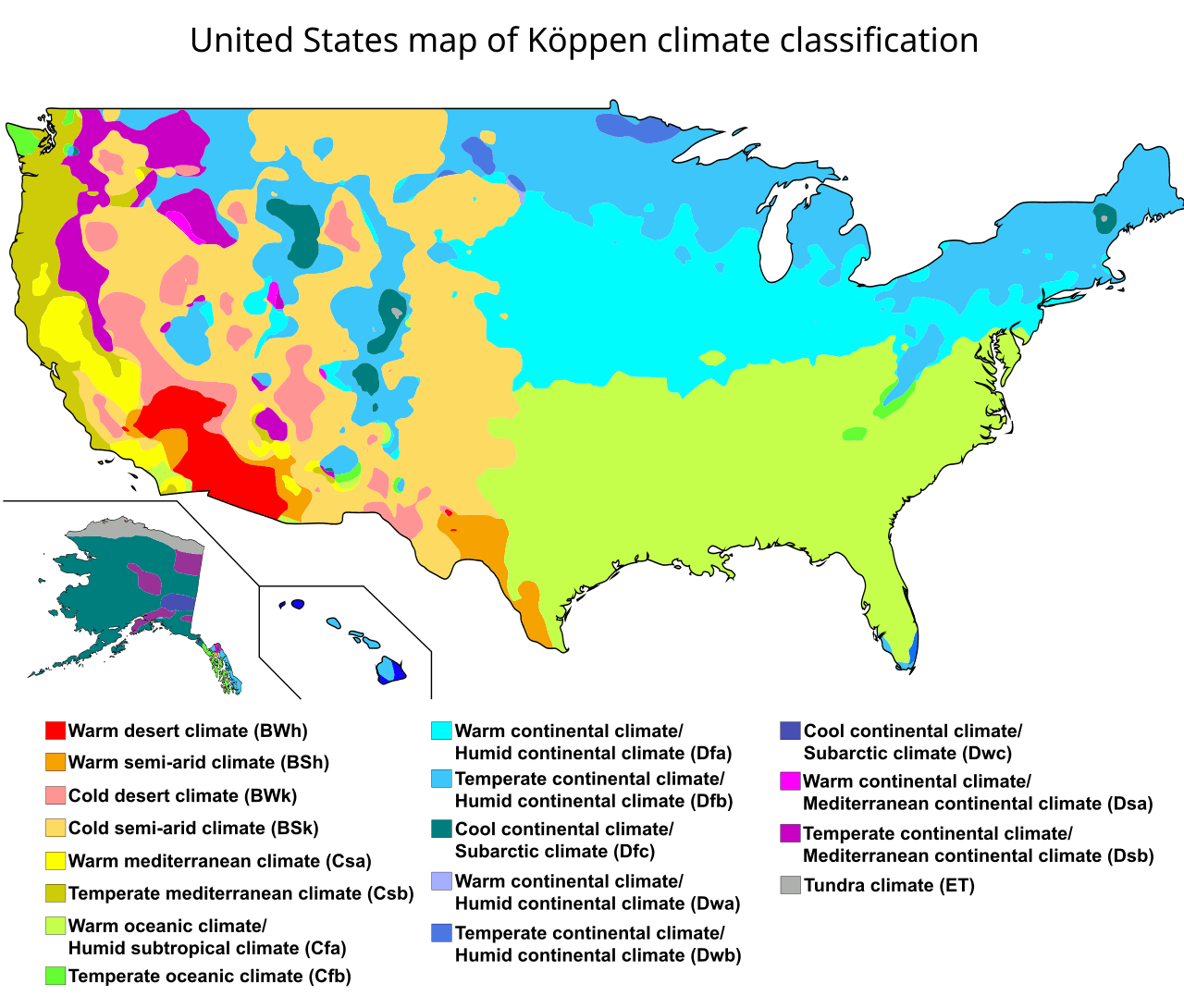
Three controls put the boundary here. Latitude: at 40°N the region gets hot summers, cold winters, and a seat under the mid-latitude storm track. Proximity to water: the Atlantic stores heat through fall, so the coast runs milder than the interior. Prevailing winds: the westerlies reach New York over a continent rather than an ocean, which is why its winters are far colder than coastal Portugal's at the same latitude. One more feature matters for hurricanes: the warm Gulf Stream passes close offshore, and in late October 2012 the water along Sandy's path was running 2 to 3°F above normal.
That boundary position writes the hazard list. Humid subtropical climates see tropical systems. Humid continental climates breed mid-latitude winter storms. This region gets both: hurricanes riding warm water north, nor'easters spun up on the jet stream, and, on rare occasions, the two at once.
A Coastline That Amplifies the Surge
Several features of the Mid-Atlantic coast work together to turn storm surge into a disaster:
90°
coastline angle
The New York Bight
The New Jersey and Long Island coasts meet at a right angle. That corner funnels surge straight into Lower Manhattan and the Jersey Shore.
~100 mi
of shallow shelf
A Shallow Shelf
The wide continental shelf lets surge build across a large area. A steep coast would scatter that energy. This one concentrates it.
<10 ft
elevation
Barely Above Sea Level
Lower Manhattan, the Rockaways, and the barrier islands sit barely above sea level, so they have almost no buffer against flooding.
40°N
latitude
Too Far North to Expect It
Hurricanes are rare this far north. The region never built its infrastructure to handle one.
Peak Water Level at The Battery
Storm tide, feet above mean lower low water (MLLW), NOAA station 8518750
Sandy's 14.06 ft combined a 9.4 ft storm surge with a full-moon high tide. Irene had come within a foot of Donna's 52-year-old record just 14 months earlier. Sources: NOAA CO-OPS water level reports; NHC tropical cyclone reports.
A Low-Probability, High-Impact Storm
Hazard science classifies disaster risk by probability and impact. Intensive risk comes from rare, high-impact events. Extensive riskcomes from frequent, low-impact ones: the nuisance floods and short outages a region absorbs every year. Sandy sits at the far intensive end of that scale. The return period of its near-perpendicular New Jersey landfall angle is estimated at roughly 700 years (Hall & Sobel, 2013), and the rarer the event, the stronger it tends to be. The rarest track in the record produced the highest water the Battery gauge has ever measured.
14.06 ft
peak storm tide
Concentrated Devastation
- Surge flooded 7 subway tunnels in hours
- 130 homes burned in Breezy Point in one night
- Con Edison substation explosion blacked out Lower Manhattan
1,100 mi
storm diameter
A Continental Footprint
- One of the largest Atlantic hurricanes ever recorded
- 24 states affected, Florida to Maine to Wisconsin
- 8.5 million customers lost power
That pairing is what made Sandy historic: intensive-risk impact delivered across a footprint the size of a winter storm's. Planning for the average hurricane would have missed both halves.
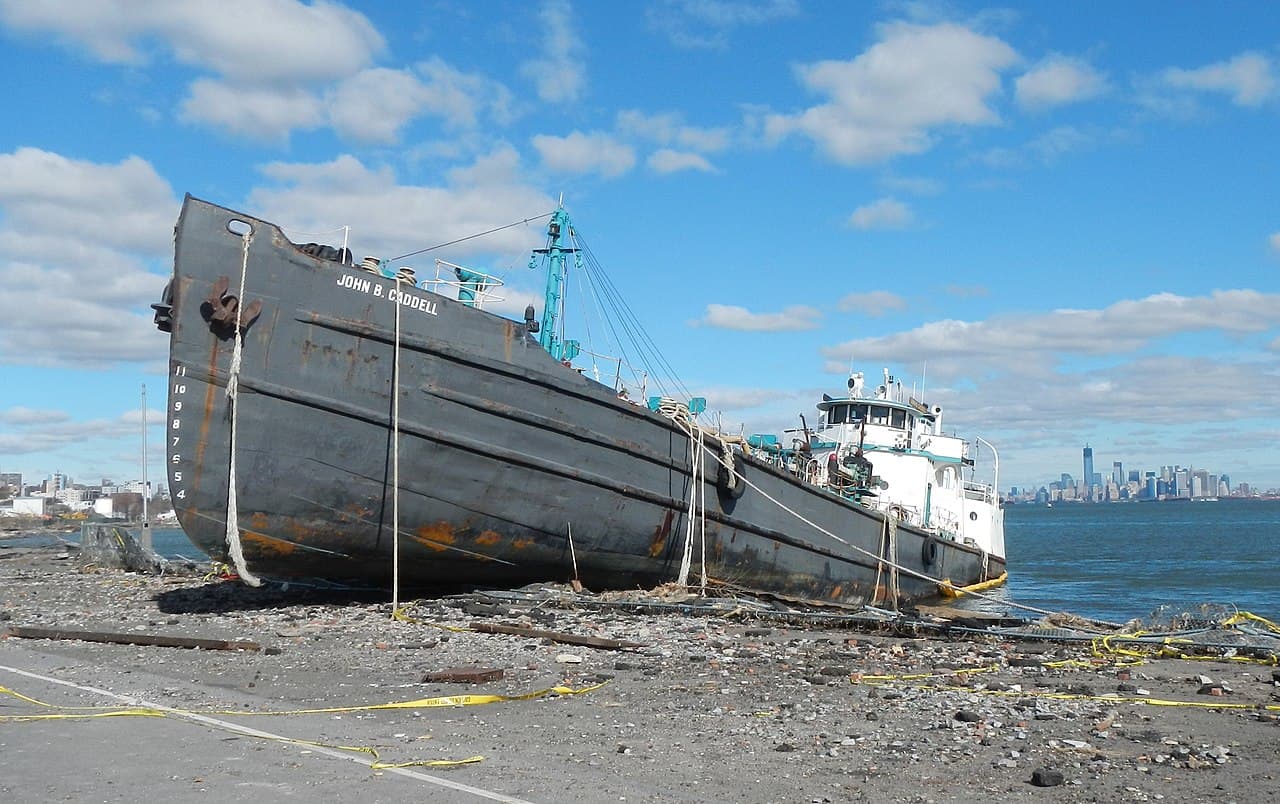
Staten Island: a 168-foot tanker washed onto a residential street
Three Unlucky Coincidences
Sandy was not just a hurricane. It was several rare events stacked on top of each other, and each one made the next worse:
Most hurricanes at 40°N curve back out to sea. A wall of high pressure over Greenland closed that exit and sent Sandy on a sharp, unprecedented left turn into New Jersey.
Sandy pulled in a mid-latitude trough and became a hybrid superstorm. Tropical-storm-force winds reached up to 560 miles from its center, a wind field about 1,100 miles across and far larger than a typical hurricane's.
The peak surge reached the Battery almost exactly at high tide on a full moon. A 9.4-foot storm surge rode in on one of the highest tides of the month, and the total water level hit 14.06 feet above the low-tide reference (MLLW), nearly four feet above the record Hurricane Donna set in 1960.
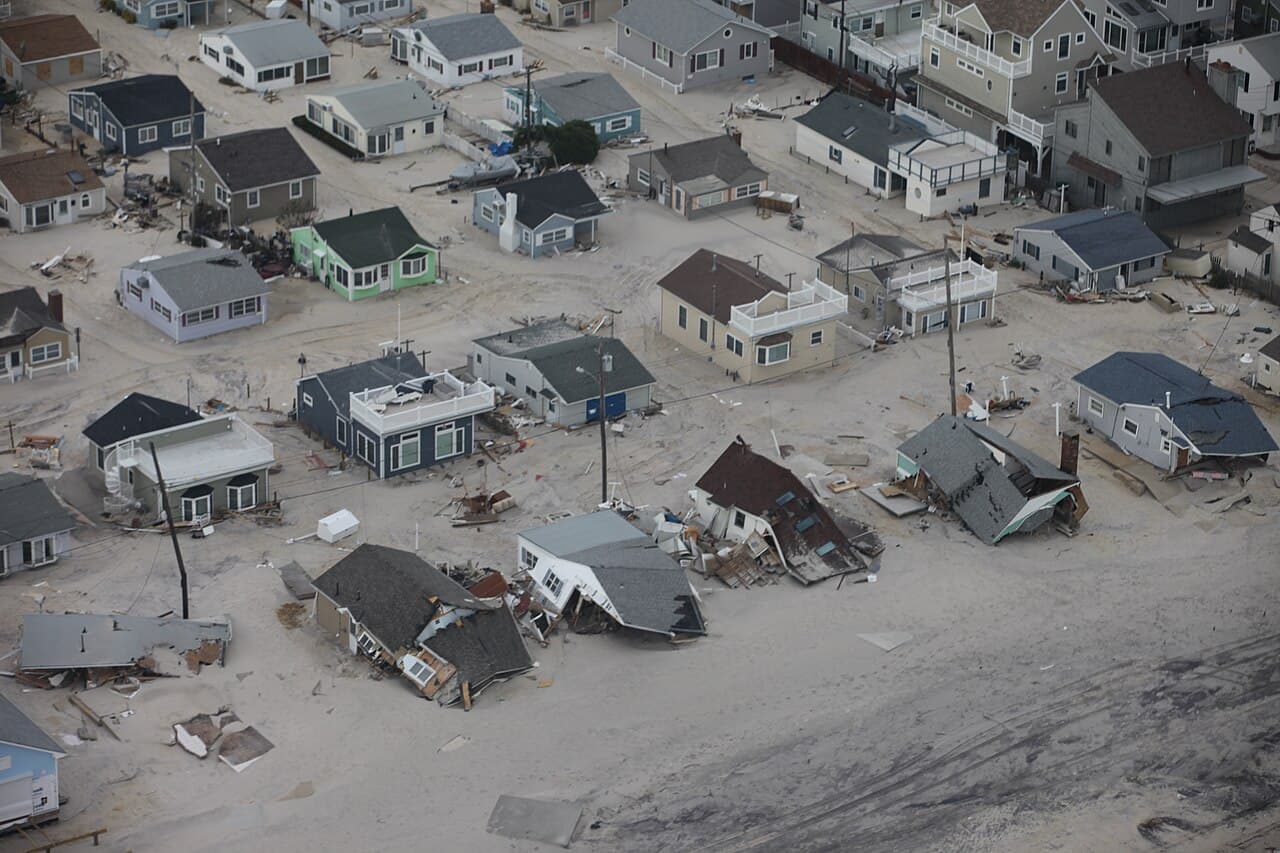
New Jersey Shore: the surge reached miles inland
Geography amplified the hazard, and rare weather delivered it. What made it a disaster was what, and who, stood in the water's path.
Continue Reading
Socioeconomic Impact & Mitigation→